

A handful of companies hire the vast majority of casual stadium staff in the UK: Levy UK (part of Compass Group), Sodexo Live!, Delaware North UK, Aramark UK and Legends/ASM Global on the catering side, plus Showsec for security and OCS Group for cleaning and FM. Their hiring processes are more alike than different – here’s how to get through them.
Step 0: apply to the right company
The most common mistake is applying to the football club. The club doesn’t hire the matchday workforce – the operators do. Look up your target venue on this site to see who runs what, or read how matchday hiring works first. Two examples: matchday catering at Old Trafford is Aramark UK, not Manchester United; hospitality at Anfield is Sodexo Live!, not Liverpool FC.
Where the operators actually advertise
- Their own careers portals. Every big operator runs one, and venue-specific casual roles are posted there first. Levy casual matchday roles go through Constellation, Levy’s recruitment brand; Compass Group also lists some Levy roles on its own jobs site.
- The big job boards. Indeed and similar boards carry the same roles, usually titled “Matchday Bar Staff – [Stadium]” or “Event Steward – [City]”.
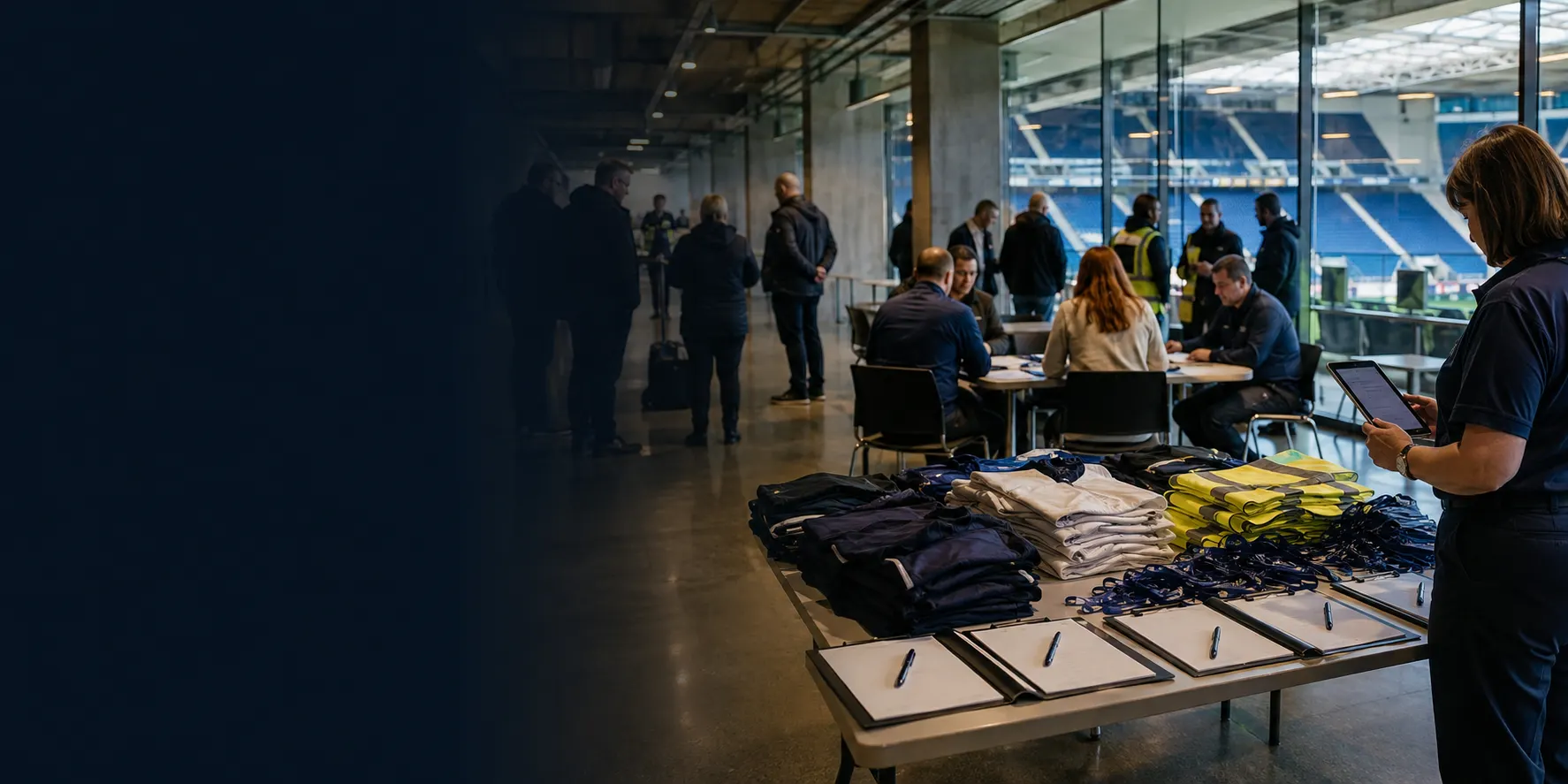
- Recruitment events at the venue. Before each season (and before new contracts launch) operators run open recruitment days at the stadium itself – often advertised on the venue’s and club’s social channels. These are the highest-conversion route: you can be interviewed, right-to-work checked and offered on the same day.
- Staffing apps. Some operators fill overflow shifts through flexible-work apps. Fine as a way in, but joining the operator’s own casual pool gives you first pick of shifts.
What the process looks like
For casual matchday roles, expect this sequence at any of the big operators:
- Online application. Short form, basic availability questions, sometimes a CV upload. For entry-level casual work the CV matters far less than availability.
- Screening / group interview. Often a phone screen or a group session at the venue. For hospitality roles there may be a short service scenario; for stewarding, Showsec runs a structured interview plus a training course before your first event.
- Right-to-work check. Digital passport check or share code – have this ready before you apply, because it’s the single biggest source of delay. Full detail in the right-to-work guide.
- Onboarding. Online modules (food safety, allergens, safeguarding, health and safety – or crowd-safety training for stewards), payroll details, uniform sizing.
- First shift booking. You’re added to the staffing platform and book onto events.
Realistic timeline from application to first shift: 2–4 weeks in season, faster around recruitment events, slower in the summer lull – see the seasonal hiring calendar for timing your application.
What they’re actually screening for
Entry-level stadium recruitment is not competitive on qualifications – operators need hundreds of people per venue and churn is high. What they select on:
- Availability. This is the real interview. An applicant available for all home matchdays including evenings and weekends beats an experienced applicant available “some Saturdays” every time. Be accurate, but understand that availability is the currency.
- Right to work, sorted. Applicants who show up with passport or share code ready get processed; applicants who don’t get parked.
- Age 18+ for anything involving alcohol or licensed security. 16 and 17 year olds are not locked out of stadiums entirely – food kiosks and some junior steward roles do hire under 18. See stadium jobs for 16 and 17 year olds.
- Basic presentation and communication. Especially for hospitality – tidy, on time to the interview, can hold a customer-facing conversation.
- For stewarding: willingness to complete the training course and, ideally, interest in the SIA pathway later.
How to stand out (it takes surprisingly little)
- Apply early in the hiring window – July–August for football season, or as soon as a recruitment event is announced. Late applicants join a waiting list.
- State broad availability and honour it. Then actually turn up: your first three shifts determine whether the staffing team puts you on the priority list for concerts and finals.
- Mention any service experience, even informal – café work, festivals, retail. For hospitality roles it can move you straight into the better-paid lounge teams.
- Apply to one operator per role type, not five. Onboarding is per-company; spread across too many and you’ll be a low-priority casual everywhere. One catering operator plus one security operator covers most people’s needs, and a single operator can give you multiple venues anyway.
If you hear nothing
Casual recruitment portals are noisy and applications do get lost. If there’s silence for two weeks: reapply when a new event or season posting goes up, go to a venue recruitment day in person, or try the other operator in your city – every big city has at least two. Persistence is unusually effective here because demand for reliable staff genuinely exceeds supply.


